Mon–Sun: 9:00 a.m.–5:00 p.m. Nov. 13, 2026–Apr. 18, 2027
The Tatra Temple of Ice
An attraction that tells a different story every season

The Tatra Ice Dome is built every year at Hrebienok, right below the Tatra peaks
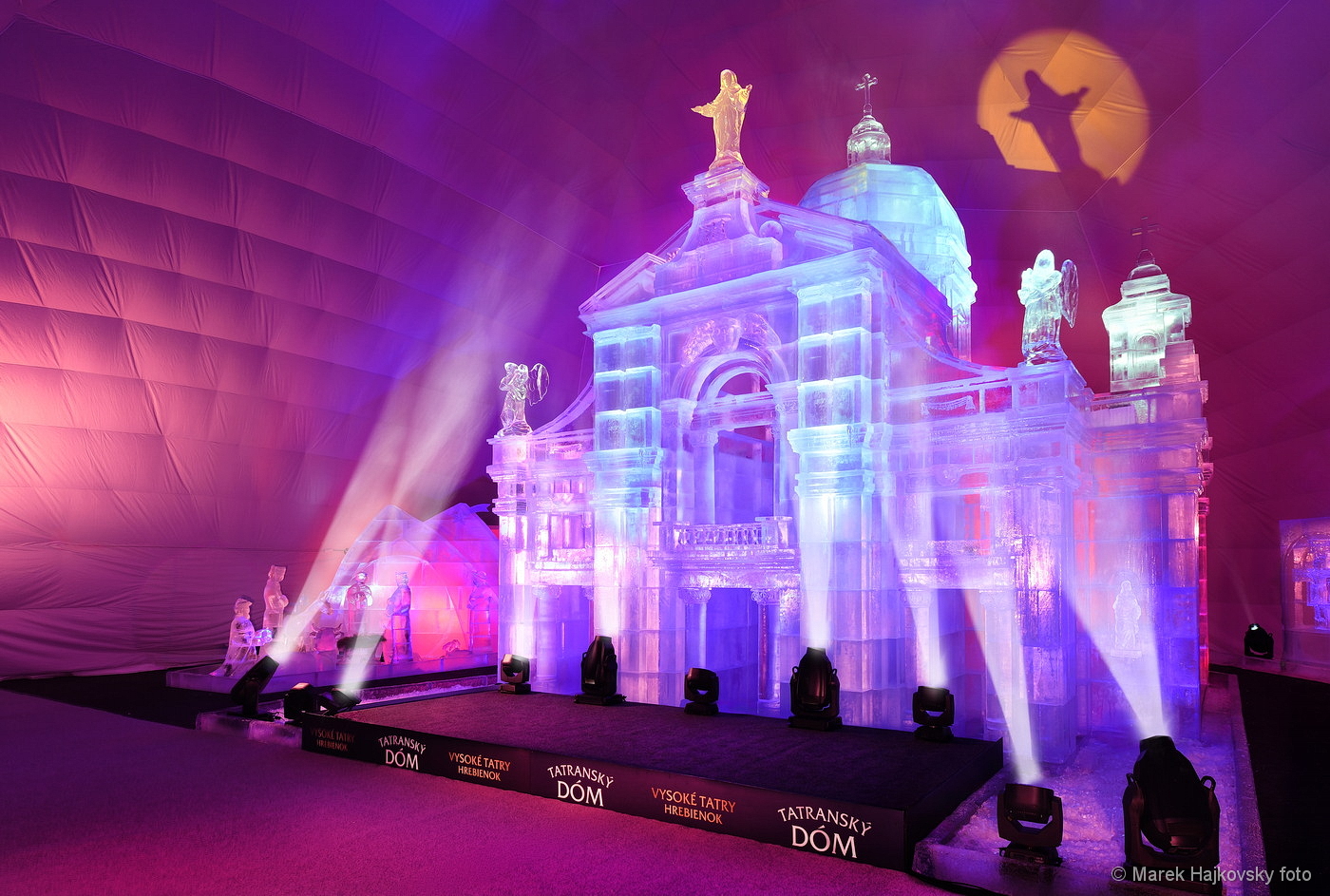
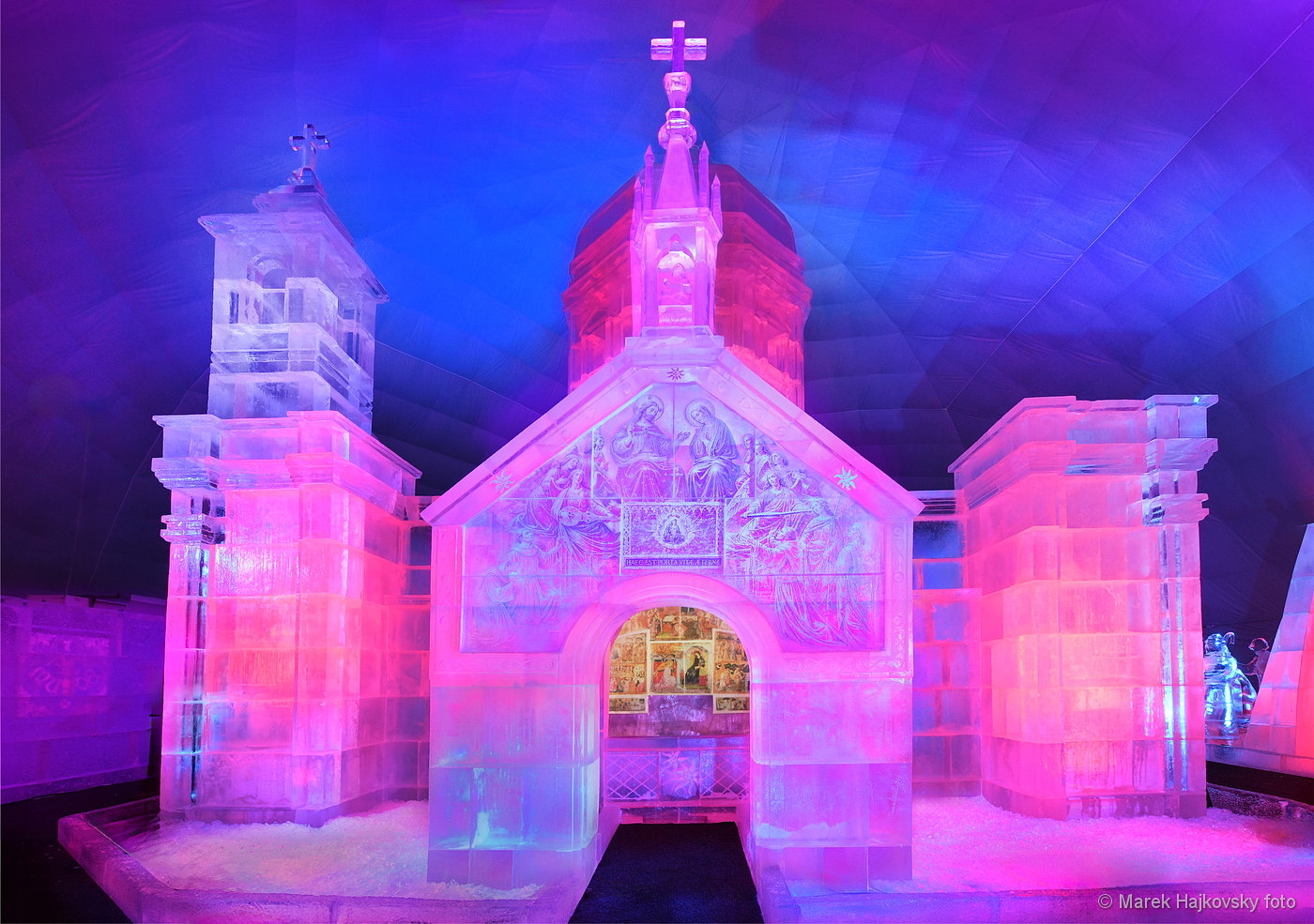
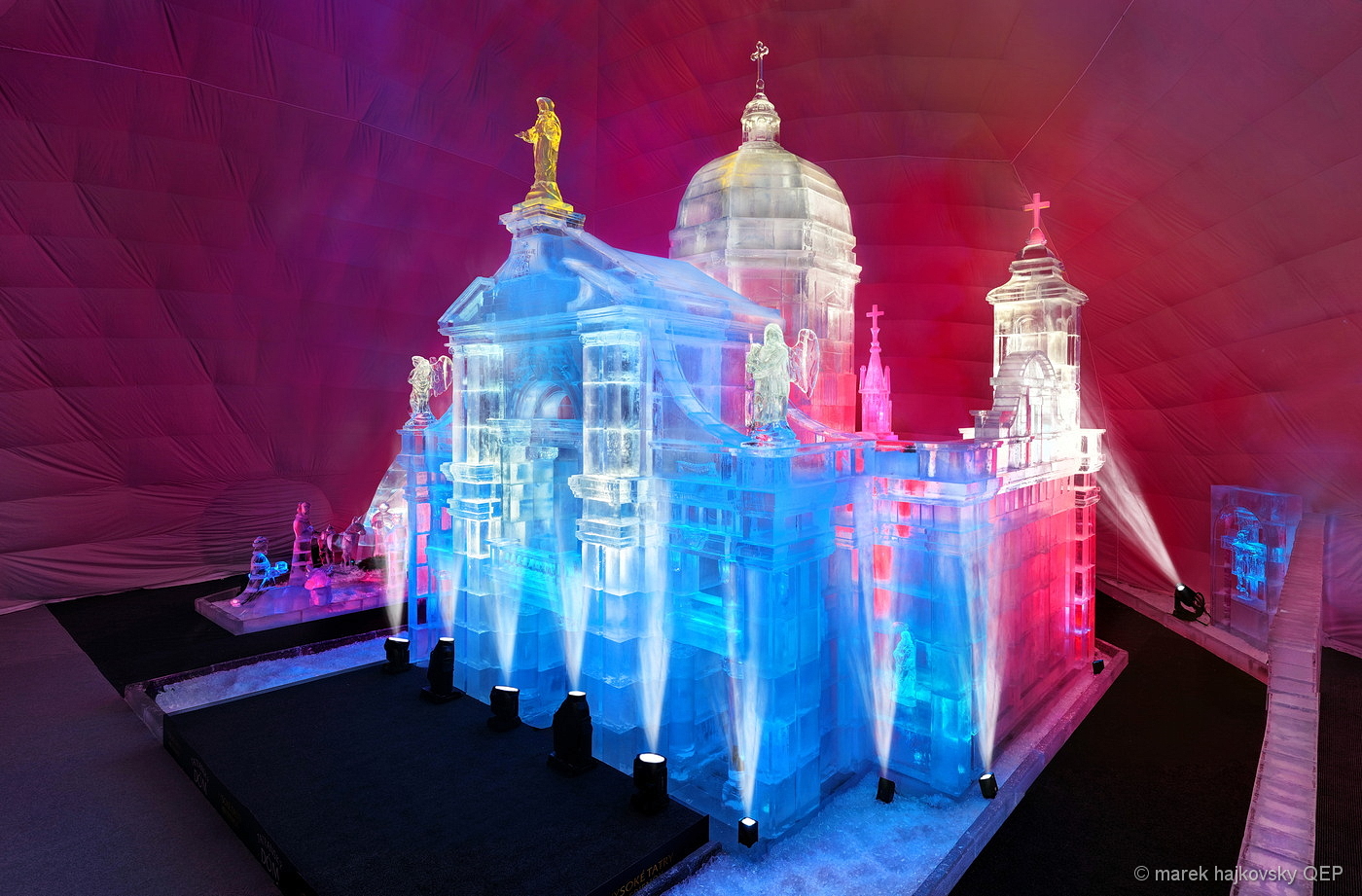
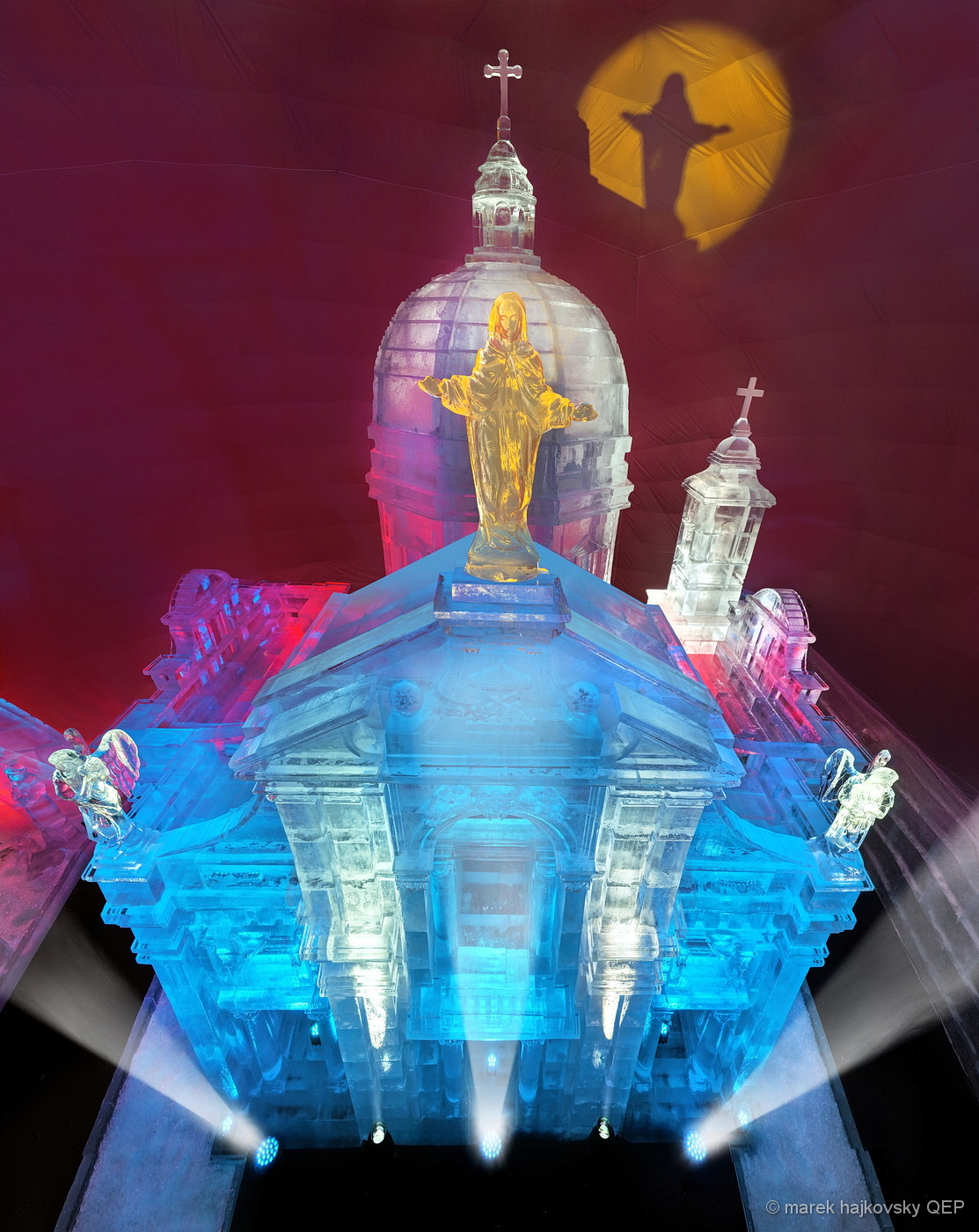
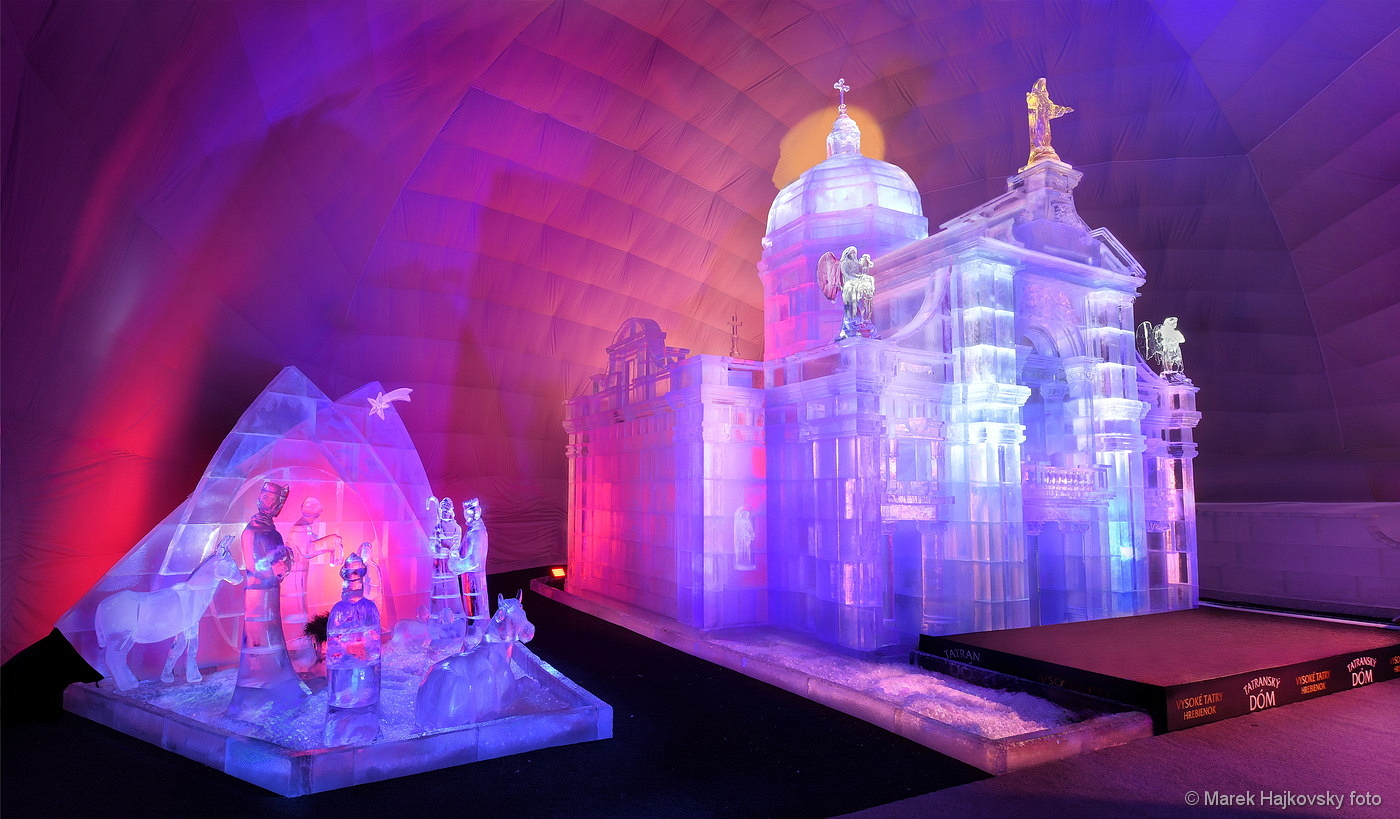
St. Francis – Basilica of Santa Maria degli Angeli in Assisi with the Porziuncola
The Tatra Temple of Ice is entering its fourteenth season, and this time it pays tribute to Saint Francis of Assisi. The theme comes in the year when the world commemorates the 800th anniversary of his death. The legacy of a man who renounced wealth to live a life of poverty, peace, and love for all creation comes to life in ice at Hrebienok (1,285 m above sea level).
A unique ice structure that is recreated anew every winter and never looks the same. Hundreds of metric tons of ice and snow are transformed each season into a new themed interior featuring ice sculptures, reliefs, and installations that will take your breath away.

Admission is free
Season of Continuous Operation
Admission is free
Ice used in construction each year
The diameter of the dome that encloses the entire ice structure
What do you need to know before you arrive?
Admission is free and the venue is wheelchair-accessible

No reservation or ticket is required
The temperature inside the dome is well below freezing
Dress warmly, including gloves and a hat
You can also reach Hrebienok on foot from Starý Smokovec
The route takes about 45 minutes
There is a restaurant in Hrebienok
Ice sculptures and lighting make for great photo opportunities
Each season has a different theme
Stay up to date with the latest information
Please read this before your visit
Current Season and Hours of Operation
The Tatra Temple of Ice is open from November 13, 2026, to April 18, 2027. Opening hours may vary on weekdays and weekends—we recommend checking the current hours before you go.
Operation of the ground cable car to Hrebienok
The ground cable car from Starý Smokovec operates daily from 8:30 a.m. to 4:30 p.m. We recommend checking the current operating status before your visit—service may be temporarily suspended in strong winds.
Parking in Starý Smokovec
You can park in the paid parking lot near the cable car station in Starý Smokovec, or in the parking lots around the town center. During the peak winter season, we recommend arriving early in the morning.
The Largest Ice Structure in the Cathedral's History
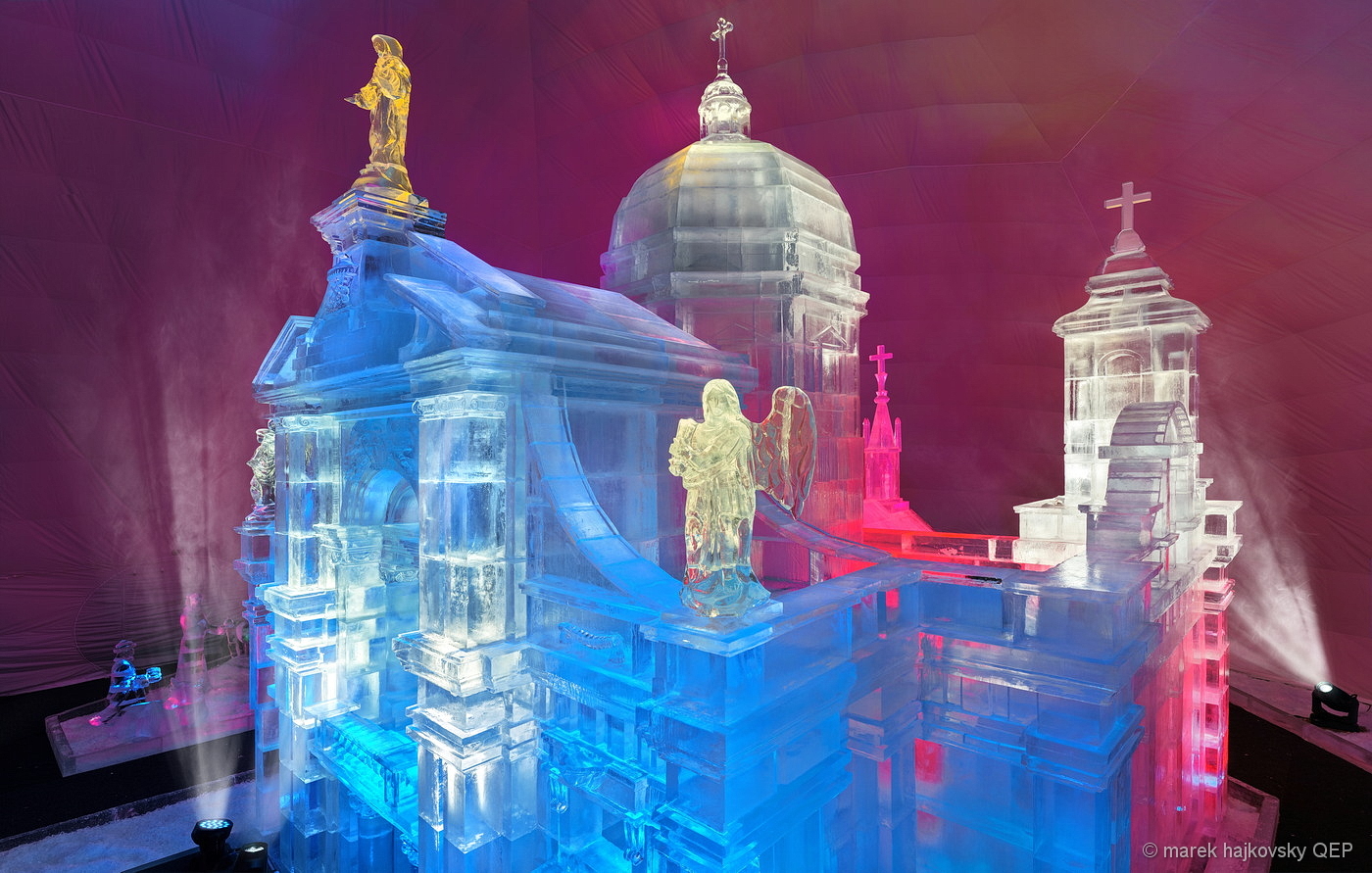
The basilica at Hrebienok was built from 2,000 ice blocks weighing250 metric tons. This means that more ice was used in its construction than ever before in the 14-year history of the The Tatra Temple of Ice . Under the direction of lead artist Adam Bakoš, 40 sculptors and assistants from Slovakia, the Czech Republic, and Germany worked on the project. The structure’s highest point reaches nearly 11 meters.

What does the 14th annual Tatra Ice Dome have in store?
Right at the entrance, on the right-hand side, visitors are greeted by the Franciscan greeting “Pax et bonum”—“Peace and Good”—carved into the ice. It is the same greeting St. Francis used to greet everyone he met. The path then runs along the side of the basilica, where its massive walls stand out, topped by a dome and a tower.
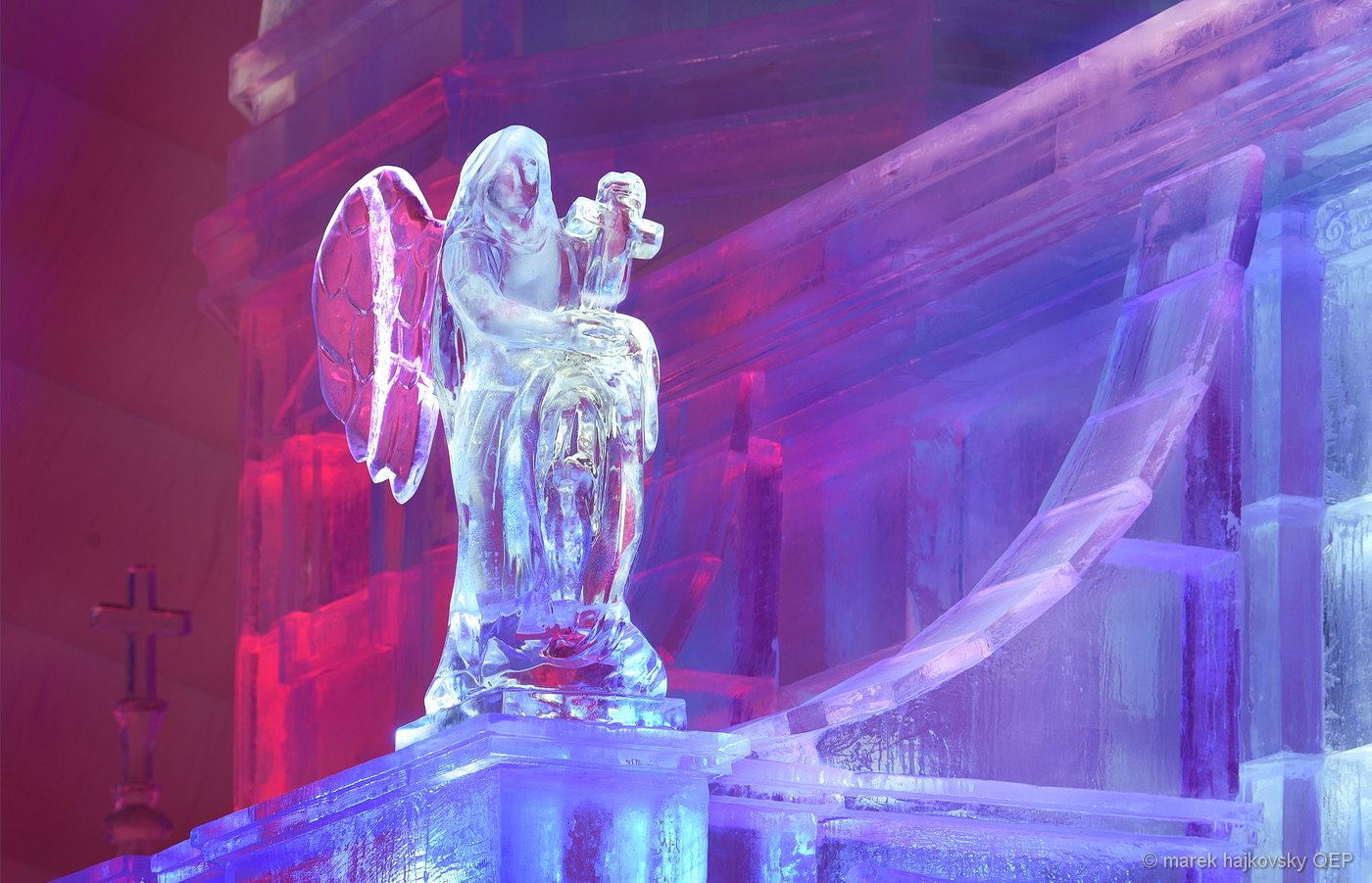
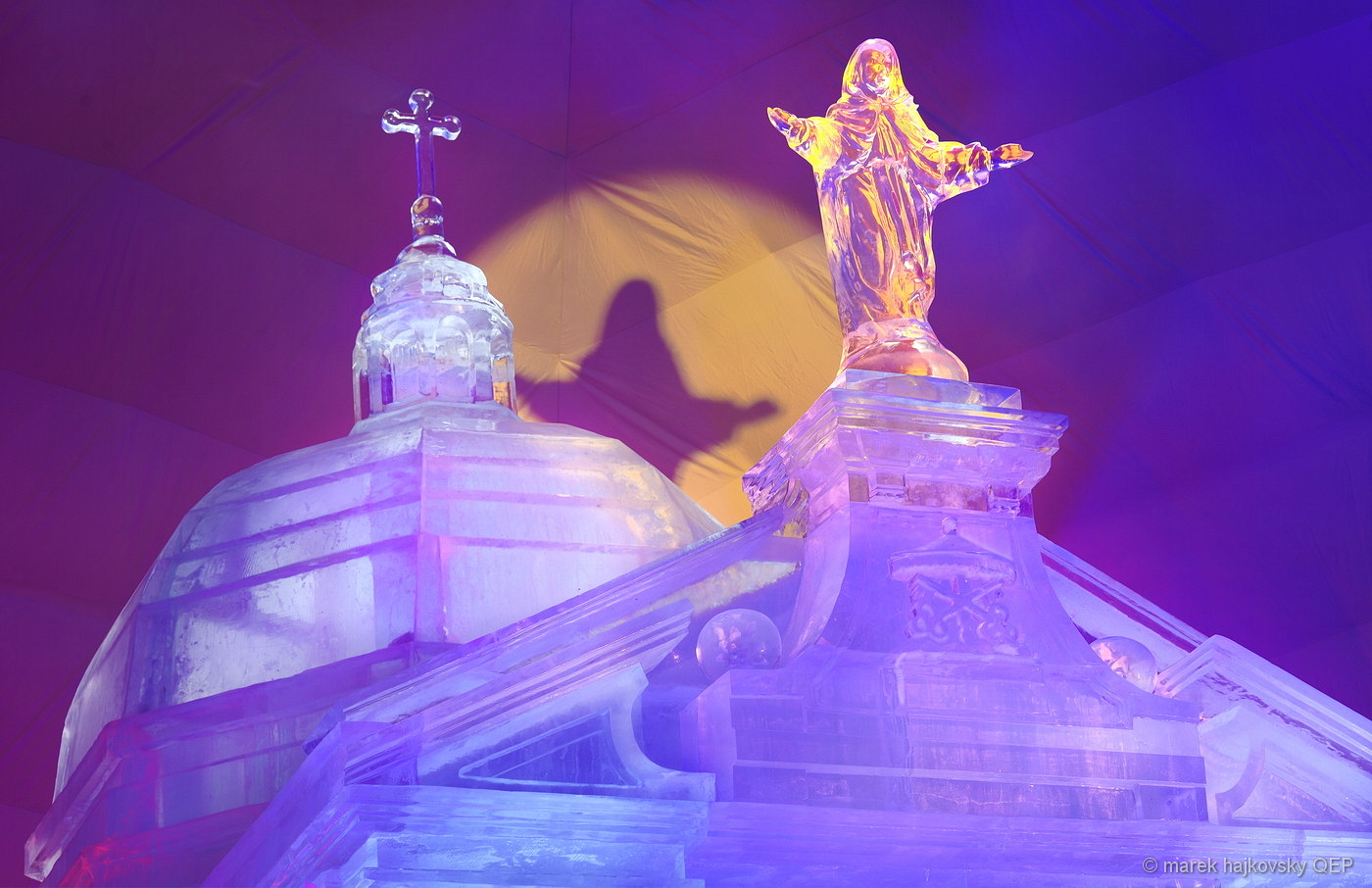
From the front, a view opens up of the monumental facade crowned with statues. In the actual basilica, it is crowned by a gilded statue of Our Lady of the Angels. On the left side, visitors will find an ice nativity scene, a reminder of Christmas 1223, when Francis first set up a manger in Greccio. Nearby, a portrait of St. Francis is carved into the ice, as if he were watching his own story unfold.

A Walk Around the Ice Basilica
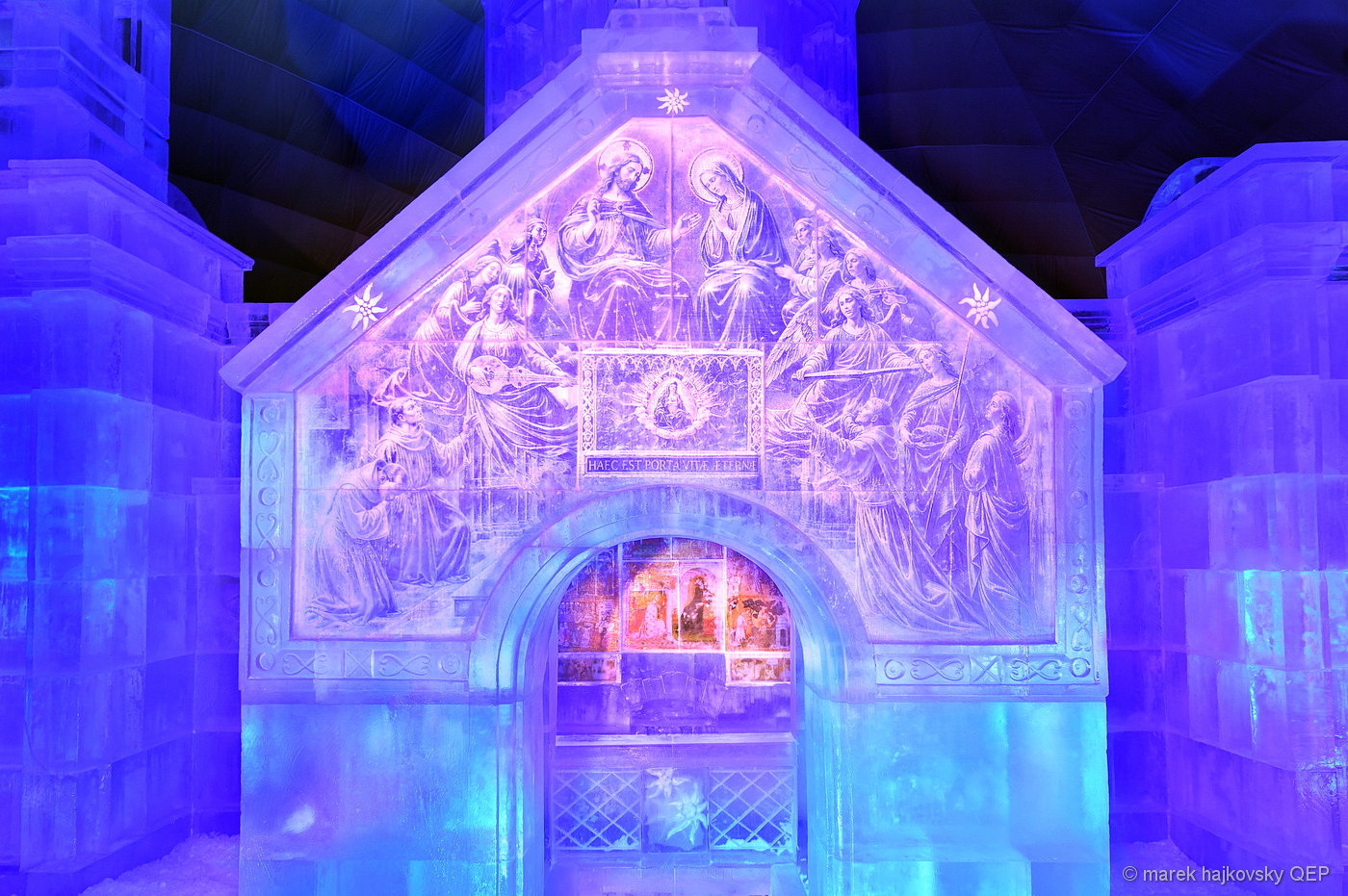
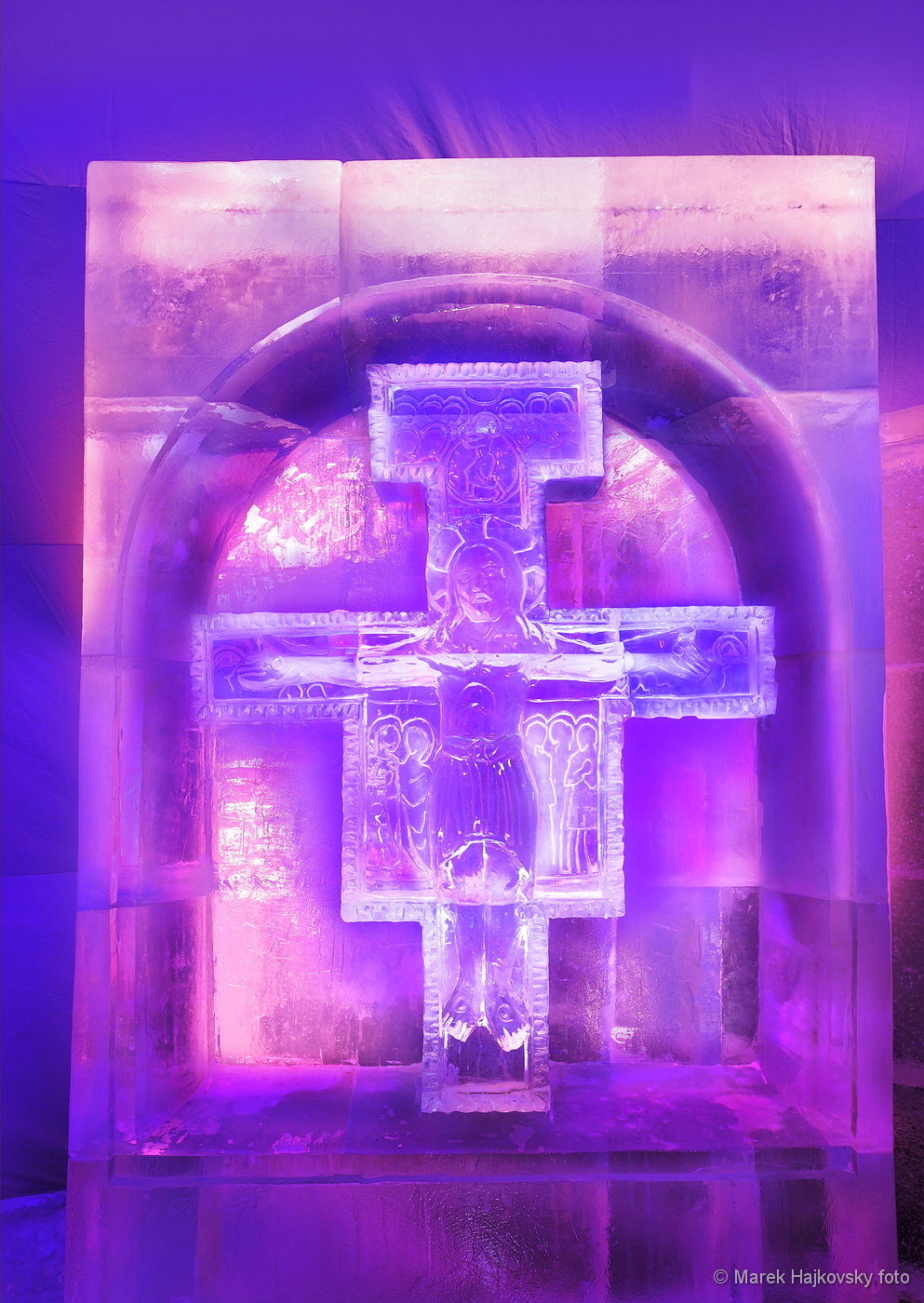
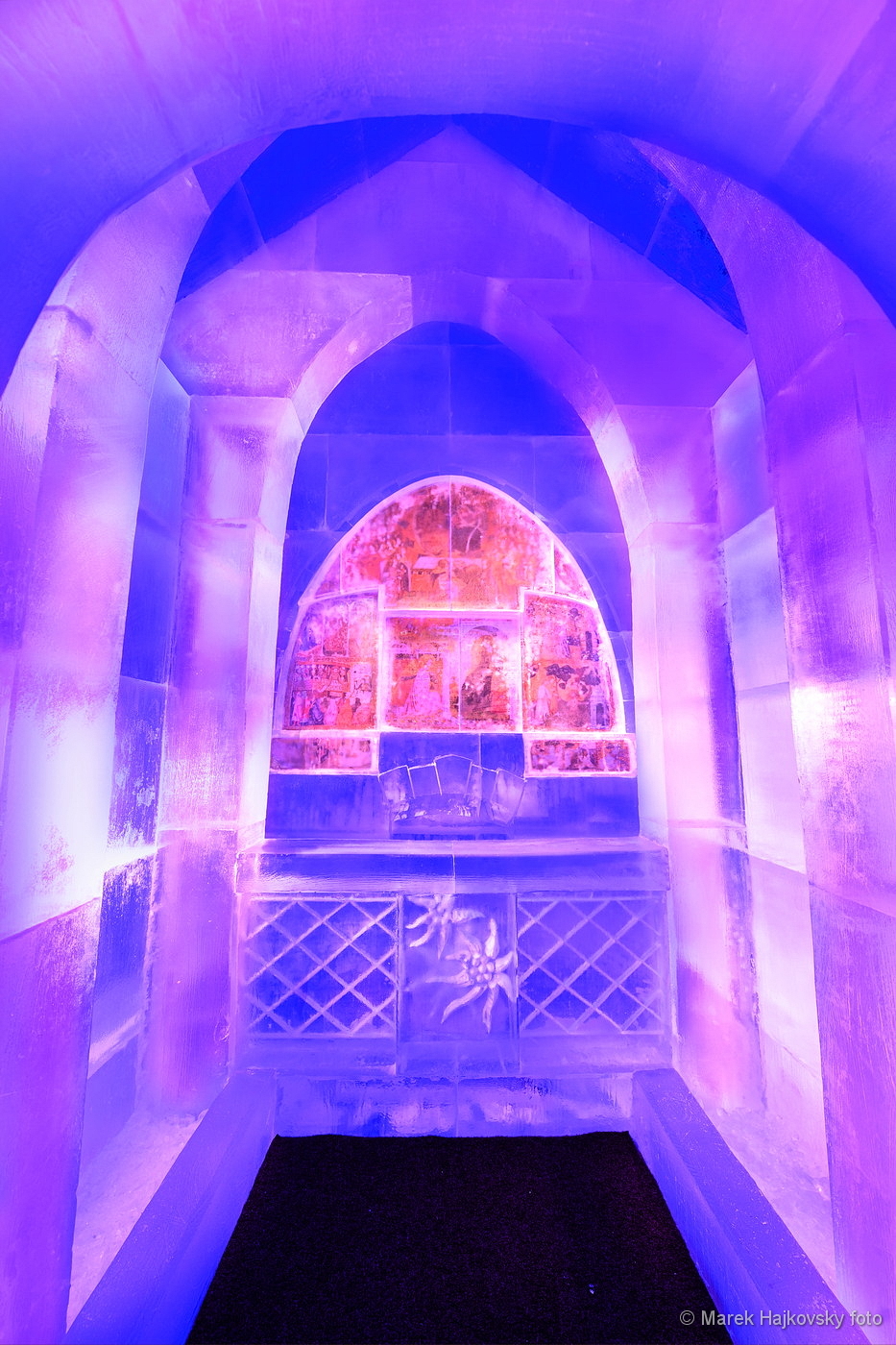
The most precious site is hidden in the rear of the building. Here stands the tiny Porziuncola, the heart of the entire basilica and the cradle of the Franciscans. Inside, its precious altarpiece is also crafted from ice and colorful sculptures. The original was painted by Ilario da Viterbo in 1393 and depicts the Annunciation to the Virgin Mary and the story of the Porziuncola indulgences, which Francis obtained for all pilgrims. Next to the Porziuncola stands the Cross of Damian, which, according to tradition, spoke to Francis. You can walk all the way around the entire ice basilica and explore it from every angle.

Stories Hidden in the The Tatra Temple of Ice
Basilica of Santa Maria degli Angeli – a church within a church
This ice structure is inspired by the monumental basilica near the Italian city of Assisi. The original church was commissioned by Pope Pius V in 1569, when the small chapel at its center could no longer accommodate the crowds of pilgrims. Construction, based on a design by architect Galeazzo Alessi, took more than a hundred years. With a length of 126 meters and a dome 75 meters high, the basilica is one of the largest churches in the Christian world. Together with Assisi, it is listed as a UNESCO World Heritage Site. Now you have the opportunity to admire its ice sculpture at Hrebienok.

Porziuncola – the cradle of the Franciscans
Porziuncola – The Cradle of the Franciscans
This small stone church, measuring just 4 × 7 meters, dates back to the 10th–11th centuries. St. Francis found it abandoned and repaired it with his own hands. It was here that he understood his calling, gathered his first brothers, and died in 1226. To this day, the Porziuncola stands directly beneath the dome of the basilica as a symbol of humility, from which one of Europe’s greatest spiritual legacies grew.

The Cross of Damian
The Cross of San Damiano
A painted icon from the 12th century hung in the dilapidated little church of San Damiano near Assisi. According to tradition, while the young Francis was praying there, Christ spoke to him from the cross, saying, “Go, Francis, repair my house.” That moment changed his life. The original cross now hangs in the Basilica of Saint Clare in Assisi.

The First Nativity Scene
The First Nativity Scene
The tradition of nativity scenes began with St. Francis. On Christmas Eve in 1223, he set up a manger filled with hay in a cave in Greccio, Italy, and brought an ox and a donkey to it. From that night, a tradition was born that has spread throughout the world—a tradition to which the nativity scene made of Tatra ice also belongs.

Pax et bonum – Peace and Goodness
Pax et bonum – Peace and Goodness
This Latin greeting, carved into the ice, has been associated with the Franciscans for eight centuries. It stems from the words of St. Francis himself, who wrote in his Testament that the Lord revealed to him the greeting, “May the Lord give you peace.” To this day, the Franciscans use it to greet everyone they meet. We also extend this wish for peace and all that is good to all visitors to the cathedral.

Portrait of Saint Francis
Portrait of Saint Francis
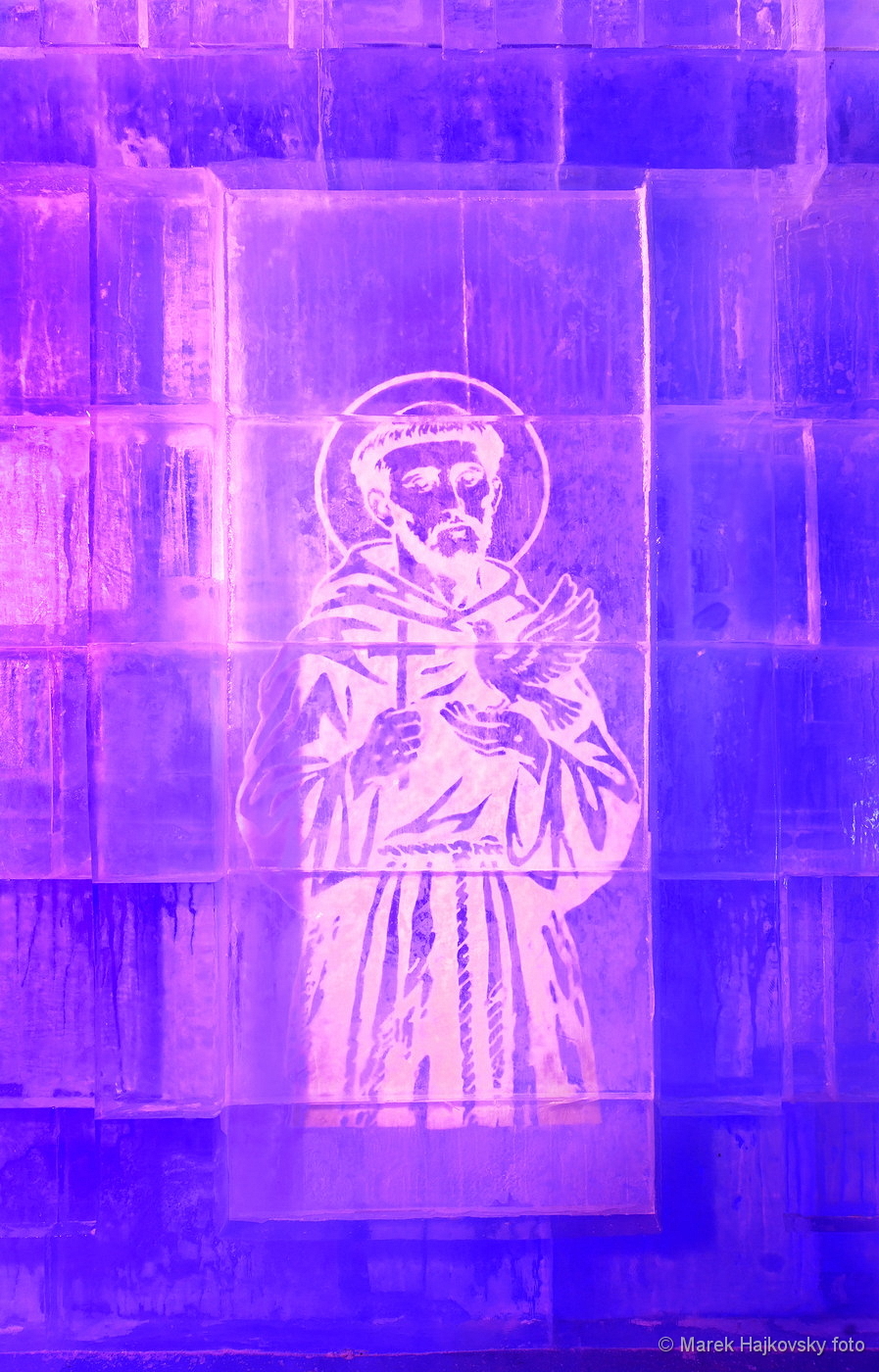
Carved into the ice is the likeness of Saint Francis, the son of a wealthy merchant from Assisi, who renounced his wealth and chose a life of poverty. He was canonized just two years after his death. He is the founder of the Franciscans, the patron saint of Italy, and, since 1979, also the patron saint of ecology.

The Tatra Temple of Ice by the Numbers
- 14th annual
- 250 metric tons of ice—the most in the arena’s history
- 2,000 ice blocks
- 25 m dome diameter
- Nearly 11 m at the structure’s highest point
- Over a month of preparatory and sculpting work
- 40 sculptors and assistants from Slovakia, the Czech Republic, and Germany
- Lead artist: Adam Bakoš
Source: Mons. Prof. ThDr. PaedDr. SSLic. František Trstenský, PhD.
nd Mgr. Lukáš Brodanský

Previous Topics on the Tatra Ice Dome
The Tatra Ice Dome, the Basilica of St. John Lateran
The Tatra Ice Dome at Hrebienok featured an ice sculpture of the Basilica of St. John Lateran in Rome during the 2025/2026 season. Under the theme “Habemus papam,” it paid tribute to Popes Francis and Leo XIV. The monumental structure, made of 225 metric tons of ice, combined precise sculptural artistry with a spiritual atmosphere.

The Tatra Ice Dome, Wawel Cathedral in Poland
During the 2024–2025 season, the Tatra Ice Dome in Hrebienok paid tribute to John Paul II on the 30th anniversary of his visit to the High Tatras. The ice sculptures of Wawel Cathedral and St. Adalbert’s Church in Kraków evoked places connected with his life and created a unique space for admiring art and enjoying a moment of tranquility.

The Tatra Ice Dome, Construction of Westminster Abbey
The Tatra Ice Dome at Hrebienok featured an ice sculpture of Westminster Abbey in London during the 2023/2024 season. The structure commemorated the 15th anniversary of Queen Elizabeth II’s visit to the High Tatras. The Gothic architecture carved from ice brought the atmosphere of the British royal cathedral to the Tatra peaks.

The Church of the Holy Sepulchre in Jerusalem
During the 2022–2023 season, the Tatra Ice Dome at Hrebienok gave visitors a glimpse of the Church of the Holy Sepulcher in Jerusalem, one of the most significant Christian pilgrimage sites. The ice replica of the church combined impressive architecture with spiritual symbolism, bringing a piece of the Holy Land to the High Tatras.

St. James Cathedral in Santiago de Compostela
During the 2021–2022 season, the Tatra Ice Dome in Hrebienok featured an ice sculpture of St. James’s Cathedral in Santiago de Compostela, Spain. The cathedral, which is the destination of the famous St. James Pilgrimage, brought the atmosphere of pilgrimage, spiritual peace, and admiration for historic architecture to the Tatra Mountains.

Church of the Resurrection of Christ in St. Petersburg
During the 2020–2021 season, the Tatra Ice Dome in Hrebienok featured an ice sculpture of the Church of the Resurrection of Christ in St. Petersburg. The striking architecture of this landmark took on a new form in the Tatra Mountains, where the beauty of ice was combined with precise sculptural work and a spiritual atmosphere.

Notre-Dame Cathedral in Paris
During the 2019/2020 season, the Tatra Ice Dome in Hrebienok featured an ice sculpture of Paris’s Notre-Dame Cathedral. The Gothic architecture of this famous cathedral took on an impressive form beneath the Tatra peaks, combining precise sculptural artistry with the atmosphere of one of France’s most significant landmarks.

St. Peter's Basilica in Rome
During the 2018/2019 season, the Tatra Ice Dome at Hrebienok featured an ice sculpture of St. Peter’s Basilica with Bernini’s colonnade. This monumental architectural structure, crafted from ice, brought the atmosphere of the Vatican to the High Tatras and offered visitors a blend of sculptural art, spiritual symbolism, and the beauty of the winter landscape.

Sagrada Família in Barcelona
During the 2017–2018 season, the Tatra Ice Dome in Hrebienok featured an ice sculpture of Barcelona’s Sagrada Família basilica. The distinctive architecture of the famous cathedral took on a new form beneath the Tatra peaks, highlighting the combination of bold shapes, precise sculptural work, and the crystalline beauty of ice.

Spiš Gothic
The Tatra Ice Dome at Hrebienok drew inspiration from Spiš Gothic architecture during the 2016–2017 season. The ice sculptures depicting its characteristic elements paid tribute to the region’s architectural heritage. Thus, beneath the peaks of the Tatras, a work of art was created that brought together local history, the art of sculpture, and the beauty of ice.

Baroque
The Tatra Ice Dome at Hrebienok featured a Baroque theme during the 2015/2016 season. The rich ornamentation and striking forms of this artistic style took the form of an ice cathedral. The sculptural design combined the ornateness of historical architecture with the transparency of ice and the wintry atmosphere of the High Tatras.

This is what it looks like here. Take a look

Must-See Places. Discover them one by one
Every corner of the High Tatras has its own story. Discover the places that shape the character of the region







The Tatra Mountains wake up differently every day
Current conditions, upcoming events, and editorial recommendations. Everything you need to know before heading to the Tatras.

Webcams
Poprad
1°C
Mostly clear

Lomnický štít
-13°C
Partly cloudy
Tatranská Lomnica
1°C
Clear

Starý Smokovec
1°C
Clear
Hrebienok
-1°C
Clear
Štrbské Pleso
-3°C
Mostly clear
Skalnaté pleso
-6°C
Mostly clear
Solisko
-8°C
Fog

Most sidewalks are open

The chairlifts are in operation

The bike trails are open


Everything You Need to Know Before Your Trip
Answers to the most frequently asked questions about the High Tatras region.
The High Tatras have something to offer all year round. The best time for high-altitude hiking is from June to October, when the hiking trails at higher elevations are open. Fall brings more stable weather, pleasant temperatures, and beautiful views. Winter is ideal for skiing, winter walks, and visiting locations that are accessible year-round. Before setting out on a trip, always check the current weather conditions and any trail closures.
You do not need a special permit for regular hiking on marked trails. However, you must comply with TANAP’s visitor regulations and seasonal closures, and you may only hike on open trails. Special rules apply, for example, to rock climbing, ski mountaineering, hiking off marked trails, or bringing a dog into the park.
You can easily reach the main Tatra resorts by train. The Tatra Electric Railways connect Poprad, Starý Smokovec, Štrbské Pleso, and Tatranská Lomnica. A cog railway runs from Štrba to Štrbské Pleso. You can also take advantage of regular bus routes and seasonal shuttle services in the region.
You can park in designated parking lots in the various Tatra villages. During peak periods, we recommend using the P+R park-and-ride lot at Eurocamp in Tatranská Lomnica and continuing by shuttle bus. From this parking lot, you can take public transportation to destinations such as Tatranská Lomnica, Tatranské Matliare, Biela Voda, or the Belianska Cave.
For hiking, choose sturdy hiking boots with non-slip soles that stabilize your feet and protect them on rocky or wet terrain. Your gear should also include weather-appropriate clothing and a rain jacket. Sandals and regular city shoes are not suitable for more demanding hikes.
When a storm is approaching, leave peaks, ridges, saddles, mountain passes, and open areas as soon as possible. Descend to lower elevations, avoid standing near isolated trees or metal objects, and keep your distance from other members of your group. If possible, take shelter in a mountain hut or a safe building. The best prevention is to check the weather forecast, set out early in the morning, and shorten or cancel your hike in a timely manner if conditions take a turn for the worse. Safety must take precedence over reaching your destination.